
Most corporate cocktail hours look good on paper, but in reality, they fall flat. I see this happen all the time at corporate events in cities like New York.
Guests cluster into small groups, conversations stall, and instead of building energy for the event, the room feels awkward and disconnected.
If you’ve ever walked into a cocktail hour and felt like something was missing, you’re not imagining it. There’s a reason this happens at so many corporate events.
The Real Problem With Most Corporate Cocktail Hours
The issue isn’t the venue. It’s not the food. And it’s not the guests.
The problem is that most cocktail hours rely on passive entertainment.
Background music, a bar, maybe a band or DJ. These can create atmosphere, but they don’t actually get people interacting.
So what happens?
People default to what’s easy:
Talking only to people they already know
Checking their phones
Waiting for the next part of the event to start
Instead of acting as a social catalyst, the cocktail hour becomes a holding pattern.
And once that energy is flat, it’s hard to recover later in the event.
What Actually Works During a Corporate Cocktail Hour
If the goal of a cocktail hour is to get people talking, connecting, and engaged, then the entertainment needs to support that.
That means shifting from passive entertainment to something interactive.
Interactive entertainment gives people a reason to engage beyond small talk. It creates shared experiences, breaks the ice naturally, and brings energy into the room without forcing it.
Instead of guests standing around waiting for something to happen, they become part of the experience.
And that changes everything.
Why Stationary Close-Up Magic Works So Well
One of the most effective ways to create that kind of interaction is through stationary close-up magic.
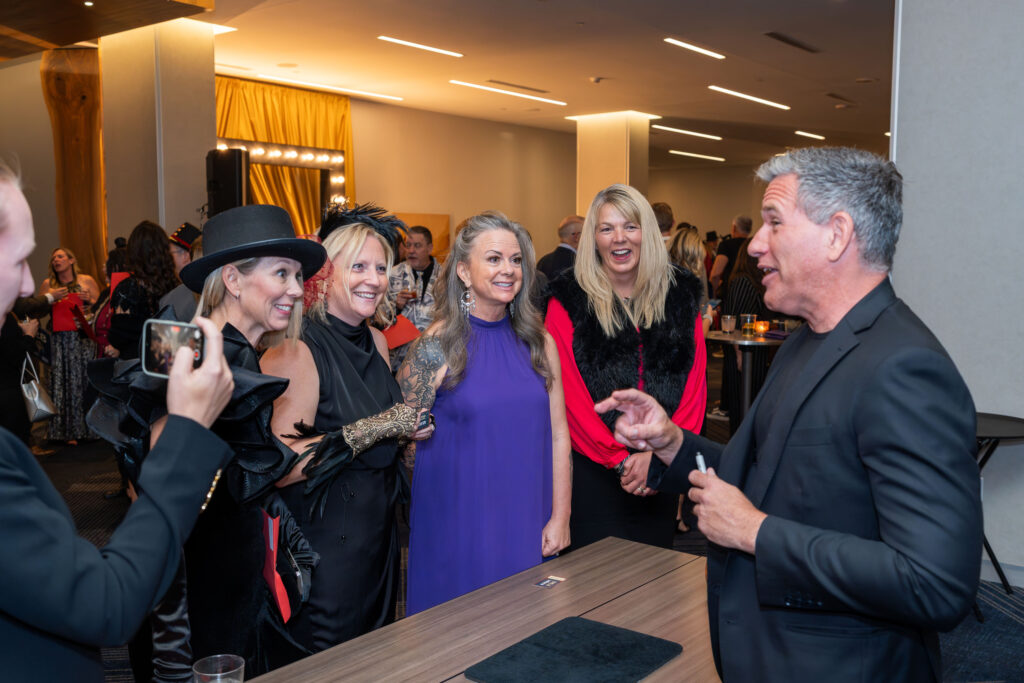
Unlike roaming performers who move quickly from group to group, a stationary setup gives guests a place to gather. Small groups form naturally, people stay longer, and the experience becomes more shared and memorable.
It also removes the pressure. Guests can choose when to engage, rather than being interrupted mid-conversation.
In a corporate setting, that balance matters. You want to enhance the event, not take it over.
In fast-paced environments like corporate events in New York City with a magician, creating moments where people can slow down, connect, and actually engage makes a noticeable difference.
How to Create a More Engaging Cocktail Hour
If you want your cocktail hour to feel more engaging and less like a waiting period, a few small changes can make a big difference.
Focus on interaction, not just atmosphere
Music and lighting help set the tone, but they don’t create engagement on their own.
Look for entertainment that gives guests a reason to participate, not just observe. The more interactive the experience, the more natural the conversations become.
Give guests a place to gather
One of the biggest mistakes is leaving guests to spread out randomly across a large space.
Creating a focal point, something people can gather around, helps build energy in the room and encourages shared experiences.
Avoid overloading the schedule
Trying to pack too much into cocktail hour can backfire.
Guests need space to connect. The goal isn’t constant stimulation, it’s creating the right moments at the right time.
Think about flow, not just entertainment
A great cocktail hour sets the tone for everything that follows.
When guests are engaged early, they’re more relaxed, more social, and more receptive throughout the rest of the event.
This is especially important at larger corporate events, whether you’re planning something locally or in a major market like Chicago, Austin, or Seattle.
Rethinking the Role of Cocktail Hour Entertainment
A great corporate cocktail hour isn’t just about filling time before the main event.
It’s an opportunity to set the tone, create connections, and build energy that carries through the rest of the evening.
When the entertainment supports interaction instead of just adding background noise, the entire event feels more engaging and more memorable.
That’s the difference between a cocktail hour people forget… and one they talk about long after the event is over.
For planners who want something interactive without disrupting the flow of the event, stationary close-up magic offers a simple, effective way to make that happen.
